Choosing unprocessed foods may help people eat fewer calories without consciously restricting how much they eat, according to new research from the University of Bristol and U.S. nutrition experts. The study, published in The American Journal of Clinical Nutrition, suggests that when people eat foods in their natural form, they instinctively prioritise nutrients over calories—an effect that could have important implications for weight management and overall health.
The findings are based on a fresh analysis of data from a landmark clinical trial led by Dr. Kevin Hall at the U.S. National Institutes of Health. That original study showed that diets high in ultra-processed foods (UPFs) promote overeating and weight gain. The new analysis explored why people eating only whole, unprocessed foods consume fewer calories despite eating more food by weight.
Researchers found that participants on an unprocessed food diet ate about 57% more food by weight than those on a UPF-only diet. However, their daily calorie intake was around 330 calories lower on average. This was largely because participants naturally filled their plates with fruits and vegetables, which are low in calories but high in essential vitamins and minerals, while eating smaller amounts of calorie-dense foods like meat, pasta, and butter.
The researchers describe this behavior as “micronutrient deleveraging,” meaning people appear driven to meet their vitamin and mineral needs first. When foods are unprocessed, this leads to higher fruit and vegetable intake and lower overall energy consumption.
Ultra-processed foods, however, seem to disrupt this balance. Although often fortified with vitamins and minerals, UPFs combine high calorie content with micronutrients, removing the natural trade-off between energy and nutrition. This may encourage calorie overload, even when portion sizes are smaller.
The findings suggest that simply shifting toward minimally processed foods could help support healthier eating patterns without the need for strict calorie counting.
REFERENCE: Jeffrey M Brunstrom, Mark Schatzker, Peter J Rogers, Amber B Courville, Kevin D Hall, Annika N Flynn. Consuming an unprocessed diet reduces energy intake: a post-hoc analysis of a randomized controlled trial reveals a role for human nutritional intelligence. The American Journal of Clinical Nutrition, 2025; 101183 DOI: 10.1016/j.ajcnut.2025.101183
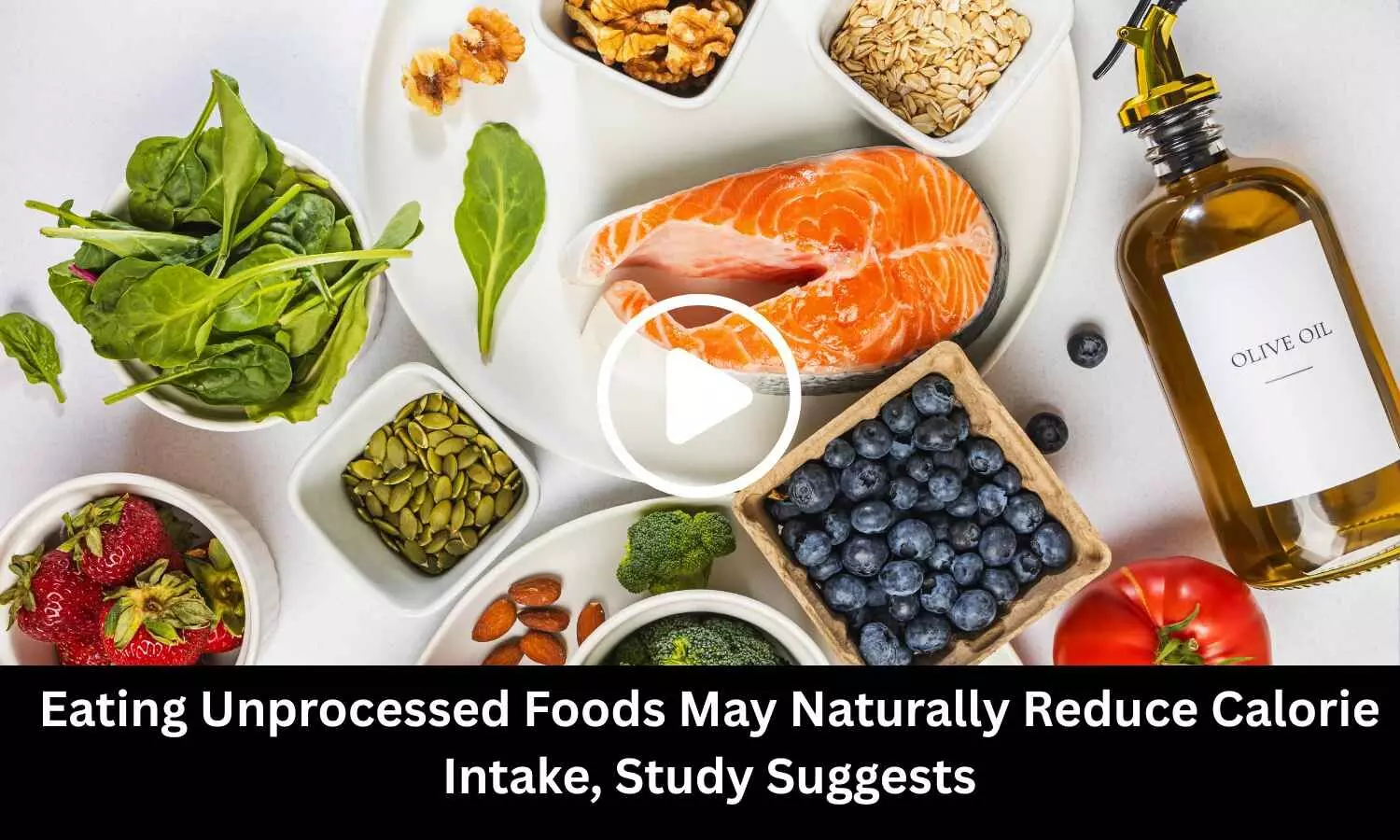
Eating Unprocessed Foods May Naturally Reduce Calorie Intake, Study Suggests
