A new study published in Human Reproduction suggests that eating high amounts of ultra-processed foods may negatively affect fertility and early embryo development.
Ultra-processed foods include packaged snacks, sugary drinks, fast food, and ready-to-eat meals. These foods are typically high in sugar, salt, unhealthy fats, and additives, while being low in important nutrients.
Researchers studied over 800 women and 650 men and found that diet plays a role in both conception and early pregnancy. In men, higher consumption of ultra-processed foods was linked to a lower chance of conceiving and a longer time to achieve pregnancy. This may be because sperm health is sensitive to diet and nutrition.
In women, eating more ultra-processed foods was not clearly linked to difficulty getting pregnant, but it was associated with slightly slower embryo growth and smaller yolk sac size in early pregnancy. The yolk sac is important because it provides nutrients to the developing embryo in the first weeks.
Although these changes were small, they are important at a population level. Slower early growth has been linked in other studies to higher risks of premature birth, low birth weight, and future heart-related issues in children.
The study highlights that both parents’ health matters when planning a pregnancy—not just the mother’s. However, since this was an observational study, it does not prove that ultra-processed foods directly cause these effects.
Experts recommend reducing ultra-processed food intake and focusing on a balanced diet rich in whole foods to improve fertility and support healthy early development.
REFERENCE: Celine H X Lin, Romy Gaillard, Annemarie G M G J Mulders, Vincent W V Jaddoe, Mireille C Schipper, Periconceptional ultra-processed food consumption in women and men, fertility, and early embryonic development, Human Reproduction, 2026;, deag023, https://doi.org/10.1093/humrep/deag023
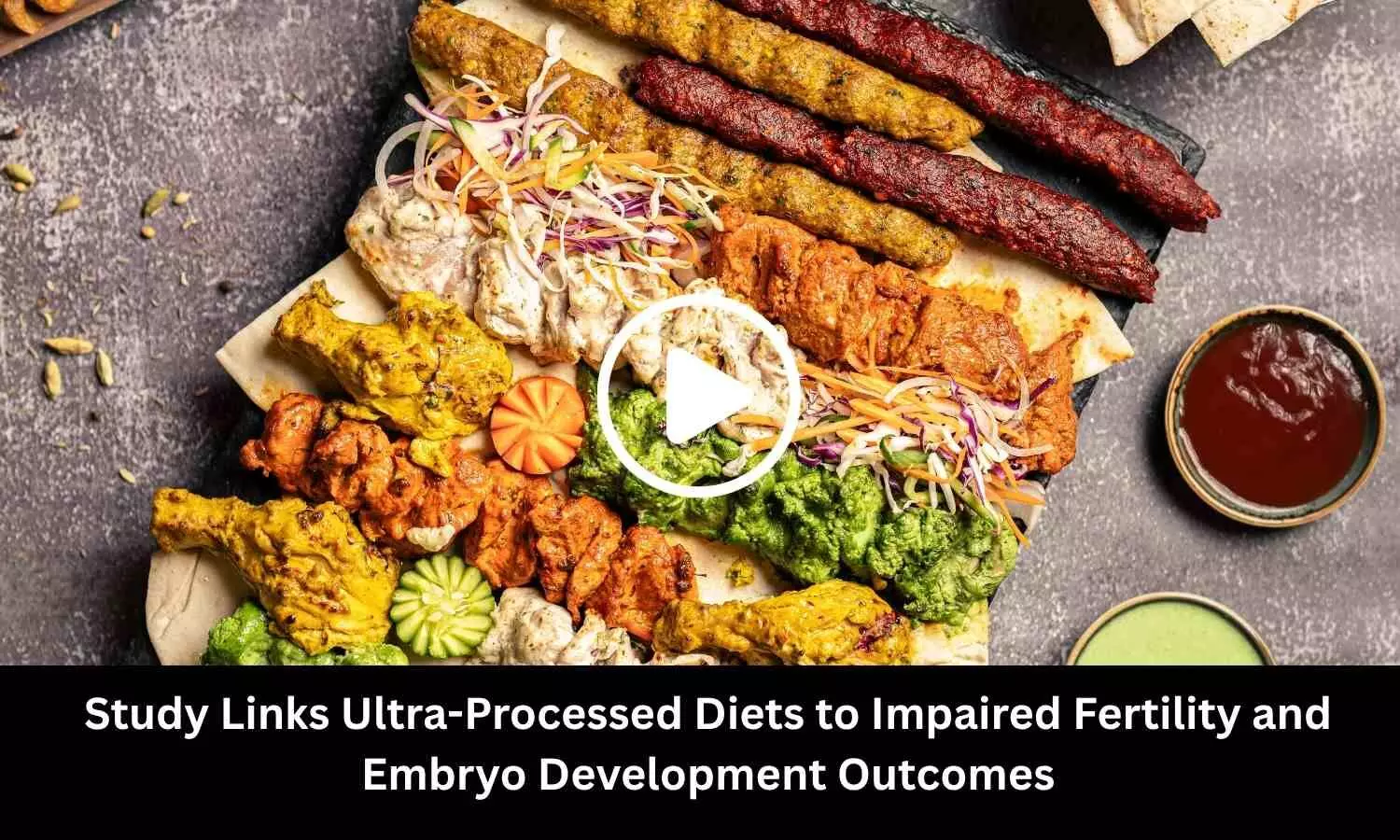
Ultra-Processed Diet May Affect Fertility and Embryo Development Outcomes: Study
